






June 12, 2026
Akira Iwase
18th Chairperson of the Executive Board, Japan Society for Reproductive Medicine
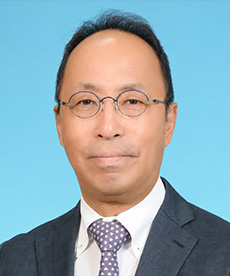
I am truly humbled and honored to have been appointed as chairperson of the Executive Board of the Japan Society of Reproductive Medicine (JSRM), a society steeped in tradition and heritage. Following the philosophy of JRSM, I would like to fully devote myself to further advancing reproductive medicine and providing safe and high-quality medical care to the public. Your continued support is greatly appreciated.
Reproductive medicine and the environment surrounding it are constantly changing recently, as seen in the progress in assisted reproductive technology (ART), advancements in genetic testing and the growth of public interest in oocyte cryopreservation. Since ART started to be covered by public health insurance schemes in 2022, reproductive medicine has become more widely known by the public as an advanced yet familiar type of medical care. However, reproductive medicine faces many challenges of different perspectives, including ethics, public consensus building, health economics and equal access to medical care. I believe that JSRM is expected to engage with the public and present how reproductive medicine should look like, based on scientific evidence.
Our four key programs work on the following: developing clinical guidelines, advancing the academic journal Reproductive Medicine and Biology (RMB), developing specialist physicians and hosting academic meetings.
The Assisted Reproductive Technology Guidelines 2021 were first published in 2021 and revised in 2025. They have contributed significantly to standards of care becoming common and improved the quality of care in reproductive medicine. Meanwhile, there are many types of advanced medical care showing progress in the field of reproductive medicine. Novel technology and findings are being produced every day as well. Given such circumstances, JSRM would like to make the guidelines more informative by appropriately reflecting latest scientific evidence and revising their contents.
RMB is an important outlet to disseminate the academic activities of JSRM to the world. Our next goal is to further develop RMB into a comprehensive academic journal of reproductive medicine that covers sociomedical research in addition to basic and clinical reproductive medicine. As reproductive medicine faces challenges involving diverse topics, spanning not only medical technology but also social systems, ethics and patient support, I believe that the development of an academic foundation that enables a wide range of discussion is important. The impact factor for RMB has remained stable and this is one of the great strengths of the academic activities of JSRM.
On the development of specialist physicians, JSRM hopes to drive human resource development to train physicians who can consistently provide quality medical care while addressing changes in circumstances in this field. In particular, we are aiming to establish a scheme that can comprehensively cover both male and female fertility treatment, as cooperation between these two is essential. In addition, we will continue to work toward the accreditation of our certification scheme for reproductive medicine specialist physicians by the Japanese Medical Specialty Board in their subspecialist-certification framework.
Finally, our academic meetings serve as crucial platforms that support the academic vitality of JSRM. We hope that by sharing latest research findings and clinical experience, JSRM members can participate in active interprofessional and multidisciplinary discussions, leading to new research work and advancement of medical care. Thanks to the personality and creativity of our chair of academic meetings, exciting academic meetings that are both academic and global are held every year. We will continue to host these.
To support the four key programs through cross-cutting approaches, we would like to further advance the activities of our Special Interest Group (SIG) and the program to develop physician scientists. Members from different areas of expertise come together in the SIG to come up with new research topics and identify clinical challenges. SIG is already becoming a new strong asset of JSRM. Through the latter program, we will develop the next generation of talent with a research-oriented mindset who can author and peer review academic papers, develop guidelines and drive clinical research.
One major challenge for the future of JSRM is that we are not global enough. We live in an era where international collaboration is increasingly important for scientific progress. To promote active participation in international joint studies, we would like to start new efforts that can, in particular, make it easier for young researchers and physicians to participate in academic conferences held overseas and facilitate global exchange. Through global exchange, we would like to facilitate the development of Japanese reproductive medicine, leading to its greater global presence.
I am determined to commit myself to making JSRM a vibrant and exciting society that is both academic and global. With my wish to advance JSRM further with all our members, I would like to sincerely ask for your continued kind support.


AIOS Nagatacho 503, 2-17-17 Nagatacho Chiyoda-ku, TOKYO 100-0014 JAPAN
Tel: +81-3-6205-7445 / Fax: +81-3-6205-7247
E-mail:info@jsrm.or.jp
(Office hours: Weekdays, 09:00 - 17:00)